FoodieAtlas
Recipes around the World
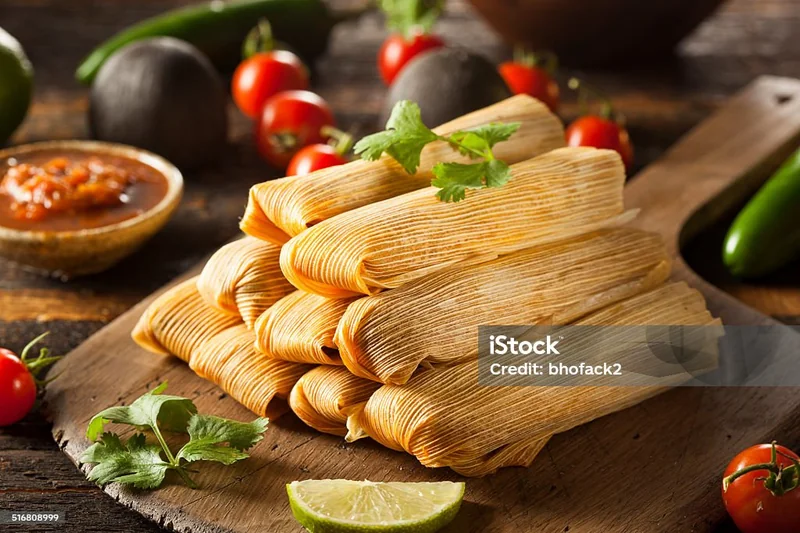
Unwrapping a steaming tamal releases a cloud of herb-scented steam and the savory aroma of slow-cooked chicken, capers, and olives blended into corn masa that's impossibly smooth and tender. In El Salvador, tamales appear year-round at church gatherings and markets, but Christmas morning demands a special batch prepared in each home, honoring a tradition that traces back centuries. The preparation is communal—women gather to soak corn husks, prepare fillings, and assemble dozens by hand in an afternoon of measured efficiency and conversation. What distinguishes Salvadoran tamales is the generous inclusion of pickled elements—capers, olives, raisins—which add sharp, slightly sweet notes against the gentle corn base.
In a large skillet, heat a tablespoon of oil over medium heat. Add the chopped onion, garlic, and bell pepper. Sauté until the vegetables are softened, about 5 minutes.
Add the shredded chicken (or pork) to the skillet. Stir in the tomato sauce, ground cumin, ground paprika, dried oregano, salt, and pepper. Mix well and cook for another 10 minutes. If using, add the sliced green olives, capers, and raisins. Remove from heat and set aside.
In a large mixing bowl, combine the masa harina, baking powder, and salt. Gradually add the chicken broth, mixing with your hands or a spoon until a soft dough forms.
Add the melted lard or vegetable shortening to the masa mixture. Mix until the dough is smooth and pliable. If the dough is too dry, add more broth as needed.
Lay a soaked corn husk on a flat surface. Spread about 2-3 tablespoons of the masa dough in the center of the husk, forming a rectangle.
Place a tablespoon of the filling in the center of the masa rectangle.
Fold the sides of the corn husk over the filling, then fold the bottom up and the top down to enclose the tamale. Tie with a strip of corn husk or kitchen twine if needed.
Repeat with the remaining husks, masa, and filling.
Arrange the tamales upright in a steamer basket, with the open ends facing up. Add enough water to the steamer to reach just below the basket.
Cover and steam the tamales for about 1.5 to 2 hours, or until the masa is firm and pulls away from the husk easily. Check the water level occasionally and add more as needed to prevent it from drying out.
Let the tamales cool slightly before serving. Serve warm with a side of salsa or your favorite toppings.
Soaking corn husks in warm water for at least 30 minutes makes them pliable so they bend and fold without cracking or tearing. A soaked husk also stays intact during steaming and won't impart a dry, papery taste to the tamale inside.
Yes, and actually many Salvadoran cooks prefer banana leaves for their larger size and more delicate flavor. Banana leaves must also be briefly warmed or soaked to soften them. The cooking time remains about the same.
Capers and olives bring briny, salty-acidic flavors that cut through the richness of lard-based masa and add complexity to the mild chicken filling. Without them, the tamale tastes flatter. Raisins provide subtle sweetness as contrast.
Tamales are done when the masa pulls away cleanly from the husk without sticking. You can test by carefully unwrapping one after 1.5 hours of steaming. If it's still sticky, re-wrap and steam longer. The timing varies based on your steamer setup.
Yes, uncooked assembled tamales freeze beautifully for up to three months in an airtight container. Steam them directly from frozen, adding about 30 minutes to the cooking time. Cooked tamales also freeze well and can be reheated in a steamer.