FoodieAtlas
Recipes around the World
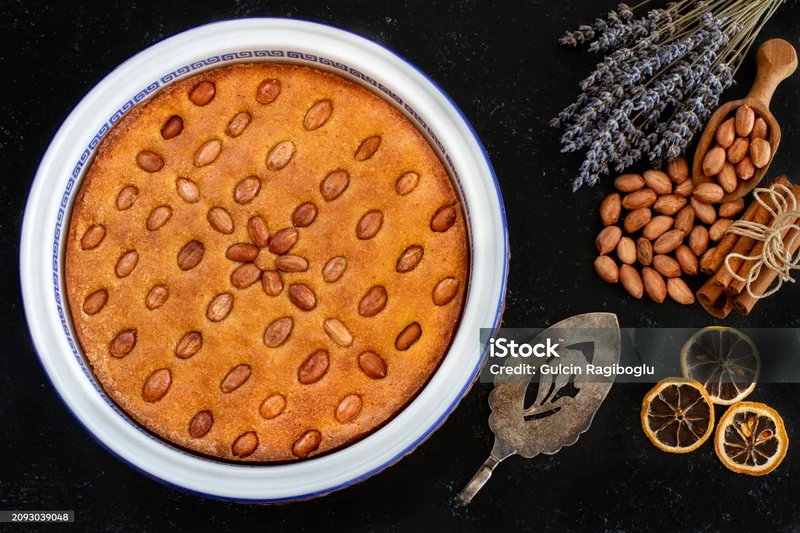
The semolina cake is dense, moist, and dripping with sweet syrup—every piece sticky from the sugar bath it receives while still warm from the oven. Rose water adds floral notes that feel both exotic and traditional, a flavor that speaks to centuries of trade routes via the Red Sea. Basbousa appears across the Middle East and North Africa, but Djibouti's version carries its own identity, influenced by Ottoman pastry traditions and local preferences. The almond on top is both garnish and promise of what's inside—a nod to Middle Eastern bakeries that shaped this dessert's modern form.
Preheat your oven to 350°F (175°C). Grease a 9x9-inch (23x23 cm) baking dish.
In a large bowl, combine the semolina, sugar, baking powder, and salt.
Add the yogurt, melted butter, water, and vanilla extract. Mix well until you have a smooth batter. If using, stir in the desiccated coconut.
Pour the batter into the prepared baking dish and smooth the top with a spatula.
Bake in the preheated oven for 30-35 minutes, or until the top is golden brown and a toothpick inserted into the center comes out clean.
Remove from the oven and let cool in the dish for about 10 minutes.
While still warm, cut into squares or diamonds and place an almond on each piece if desired.
Allow to cool completely before serving.
Pour hot syrup over the warm cake immediately after baking—the warm cake absorbs the syrup, becoming deeply saturated. Cold syrup on hot cake also creates a slight firmness on the outside with a moist interior. The yogurt in the batter also contributes moisture.
Traditional basbousa includes rose water in the syrup, giving it a floral note. It's not absolutely necessary, but it's authentic. Skip it for a simpler, less perfumed version. Vanilla extract offers a different but pleasant flavor.
Yogurt adds moisture and tenderness to the cake. It also adds slight tanginess that balances the sweetness of the syrup. It's a traditional ingredient across Middle Eastern semolina cakes.
Yes, basbousa actually improves overnight as it continues absorbing syrup. Store covered at room temperature. It keeps for several days and is equally good cold as it is fresh from the oven.
Almonds are traditional and most common. Pine nuts are more luxurious. Pistachios or walnuts work too. The nut serves as garnish and adds textural contrast to the soft, syrupy cake. Blanch them if you prefer a softer bite.