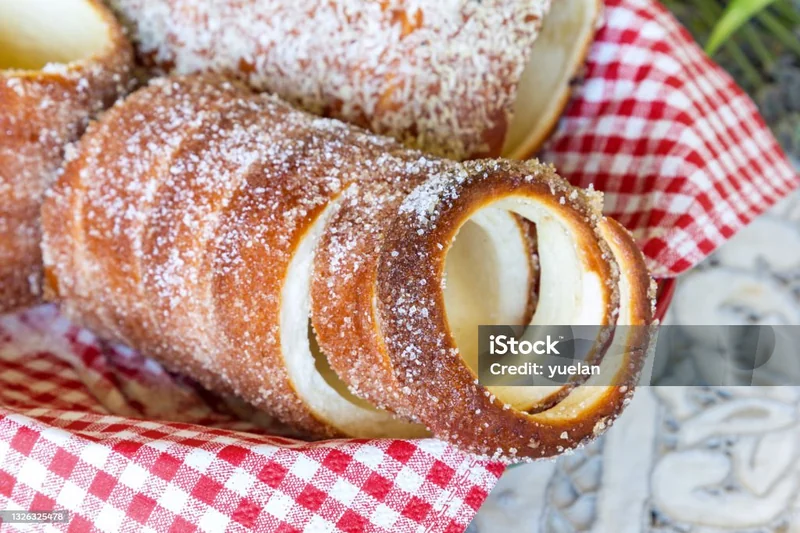
Trdelník emerges from the oven golden and fragrant, then immediately gets brushed with butter and rolled in cinnamon sugar that clings to every crack and crevice. The name comes from the cylindrical mold traditionally used—the dough is wrapped around a greased cone and baked, then the tube is slipped out before serving. This pastry originated as a Central European specialty, but Prague particularly embraced it, and now they're sold by vendors throughout the Old Town Square and tourist areas. What makes trdelník distinctive is the interplay between the yeasty dough texture and the caramelized cinnamon-sugar coating that hardens slightly as it cools.
In a small bowl, dissolve the yeast in warm milk with a pinch of sugar. Let it sit for 5-10 minutes until frothy.
In a large mixing bowl, combine the remaining sugar, melted butter, salt, and egg. Mix well. Add the yeast mixture and vanilla extract, then stir.
Gradually add the flour, mixing until a soft dough forms. You may need slightly more or less flour depending on the dough's consistency.
Turn the dough onto a floured surface and knead for about 5 minutes until smooth and elastic. Place the dough in a lightly greased bowl, cover with a cloth, and let it rise in a warm place for about 1-2 hours, or until doubled in size.
Preheat your oven to 375°F (190°C). Lightly grease a baking sheet.
Punch down the risen dough and divide it into equal portions (about 8-10). Roll each portion into a log about 12 inches long.
Wrap each log around a greased cylindrical mold or rolling pin, slightly overlapping the ends. If using a mold, lightly grease it before wrapping the dough. Place the wrapped dough on the prepared baking sheet.
Bake in the preheated oven for 15-20 minutes, or until golden brown. The dough should be cooked through and have a crispy exterior.
While still warm, brush the Trdelník with melted butter, then roll it in a mixture of granulated sugar and ground cinnamon.
Trdelník looks like a hollow chimney once you remove the internal mold. The cylindrical shape, with its open center and crimped exterior, resembles a chimney or stovepipe, which is where the name and nickname come from.
Traditionally, cylindrical metal molds are used—old-fashioned cream horn molds work perfectly, as do greased PVC pipes or any heat-proof cylinder. The key is that it must be removable after baking and needs to be well-greased.
Yes—trdelník is the Czech version of what's called chimney cake throughout Central Europe. The name varies by country, but the technique and result are essentially the same.
Modern variations include ice cream filled inside, chocolate drizzle, or nuts mixed into the coating. Traditionalists prefer just cinnamon sugar, allowing the yeasty dough to shine.
Trdelník vendors are ubiquitous in Prague's Old Town Square and major tourist areas. While convenient, street vendors' versions vary in quality—homemade trdelník is superior to most commercial versions.