FoodieAtlas
Recipes around the World
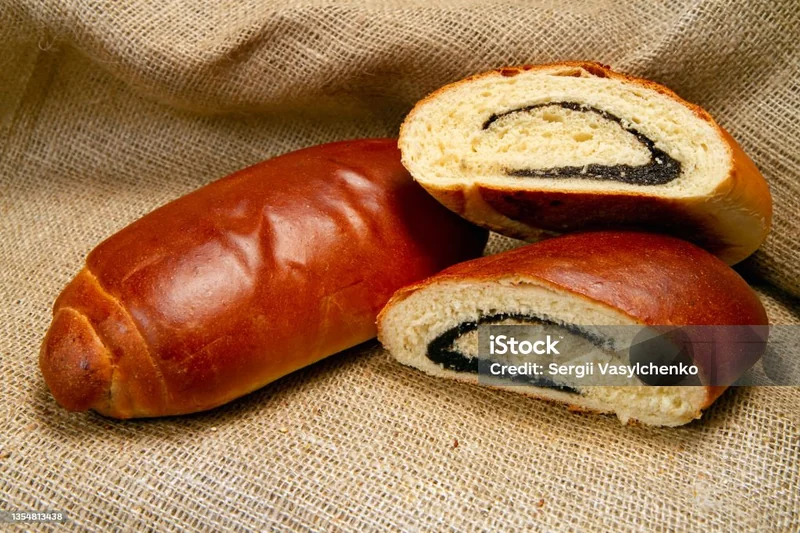
Rohlíky emerge from the oven as pale golden crescents with a fine crumb and tender bite, often topped with caraway seeds or coarse salt. These crescent rolls appear in Czech bakeries every morning, purchased fresh for breakfast or lunch sandwiches. The dough is enriched with butter and eggs, giving them richness that distinguishes them from plain bread. Rohlíky are the Czech version of the European crescent roll tradition, but with a distinctly local flavor profile and baking style that makes them unmistakably Czech.
In a small bowl, dissolve the sugar in warm water. Sprinkle the yeast on top and let it sit for about 5-10 minutes until foamy.
In a large mixing bowl, combine the flour and salt. Cut in the butter until the mixture resembles coarse crumbs.
Add the yeast mixture, milk, and egg to the flour mixture. Stir until a dough forms.
Turn the dough onto a floured surface and knead for about 5-7 minutes, or until smooth and elastic. Place the dough in a lightly oiled bowl, cover with a damp cloth, and let it rise in a warm place for about 1 hour, or until doubled in size.
Once the dough has risen, turn it onto a floured surface and divide it into 2 equal portions. Roll each portion into a circle about 1/4 inch thick.
Cut each circle into 8 wedges. Roll each wedge from the wide end to the point to form crescent shapes.
Place the crescent rolls on a baking sheet lined with parchment paper. Cover with a cloth and let them rise for about 30 minutes.
Preheat the oven to 375°F (190°C). Brush the rolls with the beaten egg and sprinkle with caraway seeds or coarse salt if desired.
Bake for 15-20 minutes, or until golden brown.
Allow the rolls to cool slightly on a wire rack before serving.
The crescent shape is traditional for rohlíky, created by rolling each wedge of dough from the wide end to the point. This shape has both aesthetic and functional purposes—it creates surface area for toppings and helps the rolls bake evenly.
Rohlíky are richer than many European rolls due to the butter and egg content, and they're significantly softer than similar rolls from neighboring countries. The second rise period is also crucial for their characteristic tender crumb.
No—while caraway is traditional and common, plain rohlíky or those topped with coarse salt are equally authentic. Caraway adds Czech flavor but the roll works well with or without it.
Rohlíky are breakfast staples, often served with butter and jam, or used for sandwiches with cold meats and cheese. They're purchased fresh from bakeries for immediate consumption.
Rohlíky are best eaten on the day they're baked. Store in a paper bag at room temperature for no more than a day, or freeze for later use. Reheat wrapped in foil to restore some of the fresh texture.