FoodieAtlas
Recipes around the World
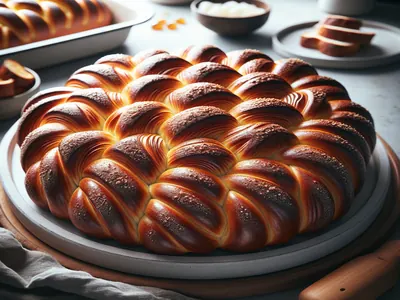
Knedlíky arrive at the table as thick-sliced rounds of pale, fluffy dumplings with a fine, tender crumb and a slight springiness that gives way to the slightest resistance. These bread dumplings are made from yeast dough, shaped into logs before being poached in salted water, then sliced and served alongside stews, roasts, and gravies. They function as the primary starch in Czech meals, acting as a vehicle for soaking up rich sauces while contributing their own subtle bread flavor. Knedlíky represent Czech practicality—using simple, affordable ingredients to create something that elevates a humble stew into a satisfying, complete meal.
In a small bowl, dissolve the sugar in warm water. Sprinkle the yeast on top and let it sit for about 5-10 minutes until foamy.
In a large mixing bowl, combine the flour and salt. Make a well in the center and pour in the milk, melted butter, eggs, and activated yeast mixture. Mix until a dough forms.
Turn the dough onto a floured surface and knead for about 5-7 minutes, or until smooth and elastic. Place the dough in a lightly oiled bowl, cover with a damp cloth, and let it rise in a warm place for about 1 hour, or until doubled in size.
Once the dough has risen, divide it into 2 or 3 portions. Shape each portion into a loaf or roll shape, depending on your preference.
Bring a large pot of salted water to a boil. Carefully add the dumplings and cook for 15-20 minutes, or until they are firm and cooked through. If using multiple dumplings, make sure they have enough space to cook evenly.
Remove the dumplings from the water and let them cool slightly. Slice into thick rounds.
Knedlíky can be served with various Czech dishes, such as goulash or roast pork. They are typically enjoyed with gravy or sauce.
Poaching in boiling water creates the signature light, airy texture. Baking would make them dense. The gentle, moist heat of boiling water allows the yeast to expand fully without browning the exterior.
Proper knedlíky are tender and slightly airy with a fine crumb, not dense or gummy. They should absorb sauce without falling apart, and be soft enough to cut with a fork but structured enough to hold their shape.
Traditional bread knedlíky use yeast. There are also potato knedlíky (made from potatoes instead) and other variations, but yeast-based are the classic Czech version.
Plenty—they need room to expand without hitting each other. A large pot of well-salted boiling water is essential. They'll float to the surface when cooked through.
Knedlíky are essential for guláš, svíčková, roasted pork, and any dish with a rich sauce. They're rarely served alone but rather as a starch component of a larger meal.