FoodieAtlas
Recipes around the World
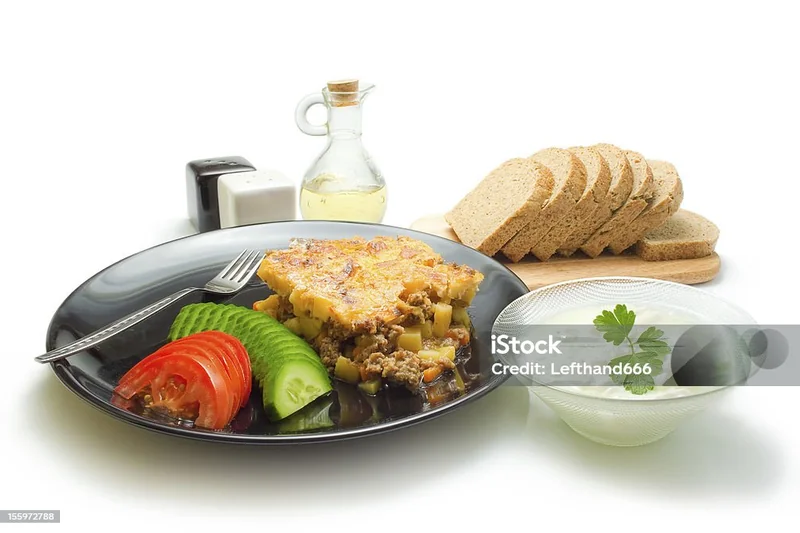
The rich, creamy béchamel topping bubbling in the oven hints at the treasures beneath—fried eggplant and potato slices interlayered with spiced meat and tomato sauce. Moussaka arrived in Cyprus through Ottoman and Balkan routes but took on its distinctly Cypriot form with cinnamon and cumin in the meat sauce. The béchamel layer—thick, velvety, sometimes studded with cheese—is what separates Cypriot moussaka from Greek versions, creating a contrast between the savory meat and the rich cream sauce.
Preheat the oven to 375°F (190°C).
Heat olive oil in a large skillet over medium heat. Fry the potato slices until golden brown on both sides. Drain on paper towels.
In the same skillet, fry the eggplant slices until golden brown on both sides. Drain on paper towels.
In a large pan, heat a little olive oil and cook the chopped onion until translucent.
Add the minced garlic and cook for another minute.
Add the ground beef or lamb and cook until browned.
Stir in the crushed tomatoes, tomato paste, cinnamon, cumin, oregano, salt, and black pepper. Simmer for about 20 minutes, until the sauce thickens.
Stir in the fresh parsley.
In a saucepan, melt the butter over medium heat. Stir in the flour and cook for 1-2 minutes, until it forms a roux.
Gradually whisk in the milk, and cook, stirring constantly, until the sauce thickens. Add the grated cheese if using, and season with salt and pepper.
In a baking dish, arrange a layer of potato slices on the bottom.
Add a layer of eggplant slices on top of the potatoes.
Spread the meat sauce evenly over the eggplant.
Pour the béchamel sauce over the meat sauce, spreading it evenly.
Sprinkle the top with additional grated cheese if desired.
Bake in the preheated oven for 30-40 minutes, or until the top is golden brown and bubbly.
Allow the moussaka to cool for a few minutes before serving. This helps it set and makes it easier to cut.
Frying creates a golden exterior that seals in moisture and prevents the vegetables from releasing water into the sauce during baking. This keeps the moussaka firm instead of soggy, and the fried edges add textural contrast to each bite.
Yes, béchamel is essential to authentic Cypriot moussaka. It creates the creamy top layer that balances the spiced meat and fried vegetables. Without it, you lose the signature texture that makes the dish special.
Either works well, though lamb is more traditional in Cyprus. Beef is milder and less gamey; lamb adds earthy depth. Many Cypriot cooks use a mix of both for complexity and richness.
375°F (190°C) is ideal. This allows the meat sauce to heat through and the béchamel to set and turn golden-brown without drying out the vegetables underneath, typically taking 30-40 minutes.
Cooling allows the layers to set and hold together when you cut it. If you slice it while piping hot, it will fall apart. A 5-10 minute rest also lets you taste the flavors more clearly.