FoodieAtlas
Recipes around the World
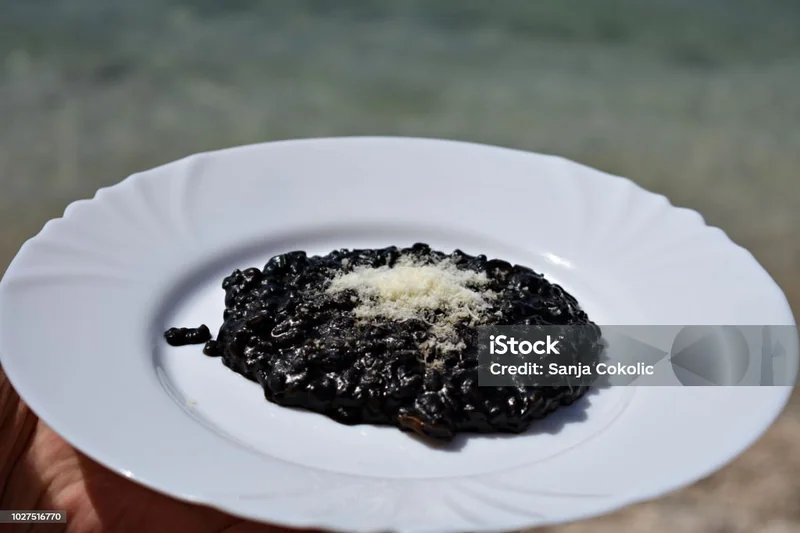
The rich, earthy aroma of squid ink perfumes the kitchen as Arborio rice slowly transforms into deep black with every stir of the spoon. This specialty originated along Croatia’s Dalmatian coast, where cuttlefish thrive in the clear Adriatic waters and became central to local cooking. The dish requires patience and attention—constant stirring coaxes the rice into creamy submission while the ink infuses every grain with briny, umami depth. Black risotto appears on celebration tables throughout coastal Croatia, a testament to the sea’s generosity and the skill required to cook risotto perfectly.
In a saucepan, keep the fish or vegetable stock warm over low heat.
Heat the olive oil in a large skillet or saucepan over medium heat.
Add the chopped onion and cook until translucent, about 5 minutes.
Add the minced garlic and cook for another minute.
Stir in the Arborio rice and cook for 2-3 minutes, until the rice is lightly toasted.
Pour in the white wine and cook until the wine has mostly evaporated.
Begin adding the warm stock, one ladle at a time, to the rice. Stir frequently and allow each addition of stock to be absorbed before adding more.
Continue this process until the rice is creamy and al dente, about 18-20 minutes.
Stir in the squid ink, mixing until the risotto turns a deep black color.
Add the squid rings and cook for an additional 3-4 minutes, until the squid is cooked through.
Stir in the grated Parmesan cheese and season with salt and black pepper to taste.
Garnish with chopped fresh parsley and serve with lemon wedges on the side.
Fresh squid ink comes from cuttlefish or squid you clean yourself—ask fishmongers to reserve the ink sacs when you buy the seafood. Pre-packaged squid ink in small bottles is increasingly available in specialty and Italian markets, making this dish more accessible than ever. Either option works equally well in the finished dish.
The flavor is distinctly briny and umami-rich rather than fishy—the ink provides depth and earthiness more than strong seafood taste. Paired with tender squid rings cooked into the risotto, you get a subtle sea flavor layered throughout. Many first-timers are surprised how elegant and non-aggressive the taste is.
Risotto relies on releasing starch from the rice grains to create creaminess without cream. Stirring frequently keeps heat evenly distributed and helps each grain cook uniformly. The motion also agitates the surface, encouraging starch to thicken the cooking liquid into that luxurious, sauce-like consistency Italians call "all'onda." Skip the stirring and you'll get separate grains instead of creamy risotto.
Arborio or Carnaroli rice (short-grain Italian varieties) are essential—their high starch content creates the signature creaminess. Long-grain rice like jasmine won't work; it stays separate rather than melding into a creamy whole. Using the correct rice type is non-negotiable for authentic crni rizot.
A crisp white wine from the Croatian coast pairs beautifully—Dalmatian Malvasia or Posip complement the briny squid flavors perfectly. Light lagers also work well, cutting through the richness. Many Croatians simply serve it with a squeeze of fresh lemon and good company, no additional beverage needed.