FoodieAtlas
Recipes around the World
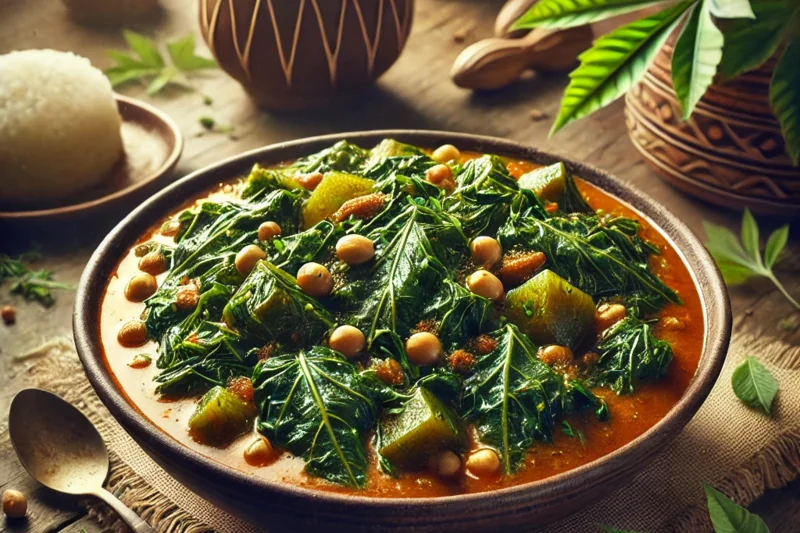
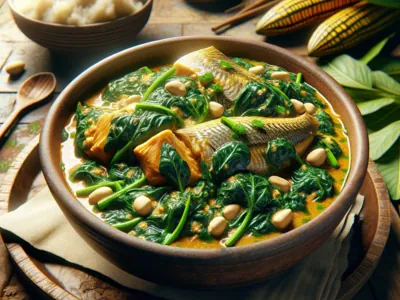
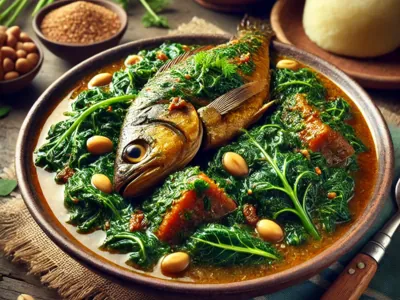
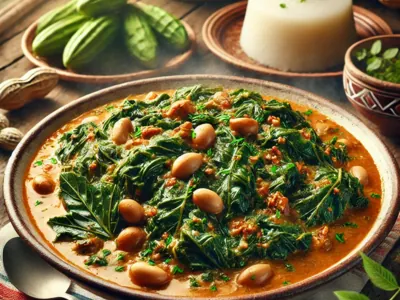
The moment you taste Saka Saka, the rich aroma of palm oil mingles with the earthiness of pounded cassava leaves and the warmth of ground peanuts. This dish traces its roots deep into the Democratic Republic of the Congo, where families have prepared it for generations. Saka Saka demonstrates the Congolese mastery of transforming humble vegetables into something remarkable through slow cooking and layered flavors. Every household adapts it slightly, adding smoked fish or meat, making it uniquely their own while maintaining its essential character.
If using fresh cassava leaves, rinse and chop them. If using frozen, thaw them before use.
In a large pot, bring water to a boil and add the cassava leaves.
Boil for about 30 minutes to soften the leaves, then drain and set aside.
Heat the palm oil or vegetable oil in a large pot over medium heat.
Add the chopped onions, minced garlic, and minced ginger. Sauté until the onions are translucent and fragrant.
Stir in the ground peanuts or peanut butter, mixing well with the onions and spices.
Add the ground paprika, ground cumin, and dried thyme.
Pour in the chicken or vegetable broth and bring to a simmer.
Add the softened cassava leaves to the pot and stir well to combine.
If using hot peppers, add them during the last 15 minutes of cooking.
If using smoked fish or meat, add it to the pot and cook for an additional 15-20 minutes, allowing the flavors to meld.
Reduce the heat to low and let the dish simmer for about 45-60 minutes, or until the flavors are well combined and the leaves are tender.
Adjust seasoning with salt and black pepper to taste.
Garnish with fresh parsley or cilantro before serving.
Absolutely—Saka Saka is naturally vegetarian when made with just cassava leaves, peanuts, and palm oil. Many Congolese home cooks prepare it this way, making it perfect for vegetarian diets while keeping the flavors rich and satisfying.
Pounding breaks down the tough fiber and helps the leaves release their moisture, allowing the peanut and palm oil base to coat them evenly. This also creates the dish's signature creamy texture when cooked slowly. The method matters more than the equipment—a mortar, stone, or even a heavy pot works.
The leaves should be completely tender and almost melting into the sauce, and the oil should separate slightly on top, showing that the flavors have fully infused. Taste as you go—you should be able to feel each ingredient (peanut, palm oil, spice) separately but working together.
Pondu is a simpler, more everyday version using the same cassava leaf base but often without peanuts and prepared more quickly. Saka Saka is the richer, more elaborate version that rewards longer cooking and more careful pounding of the leaves.
Yes, frozen cassava leaves are perfectly acceptable and actually convenient. They're harvested and frozen at peak ripeness, so they often have better flavor consistency than fresh leaves. Simply thaw them gently and proceed with the recipe.