FoodieAtlas
Recipes around the World
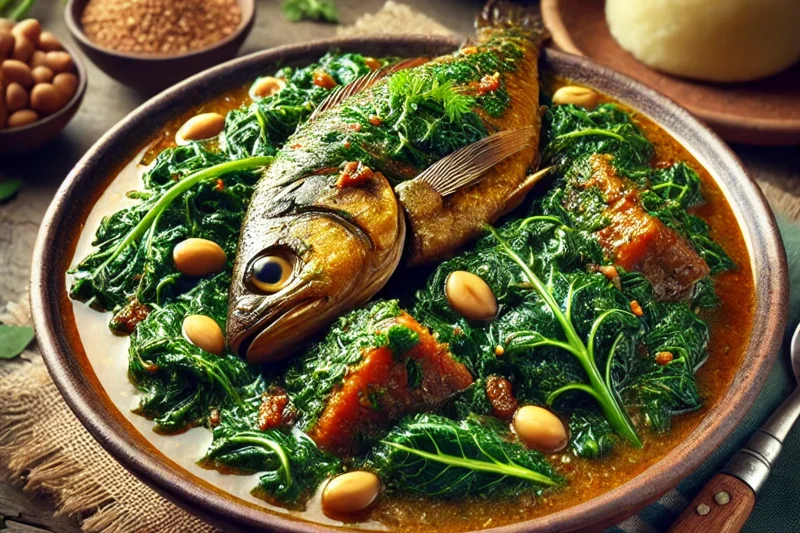
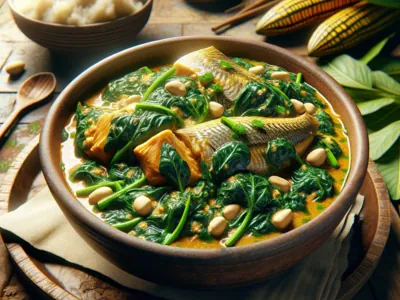
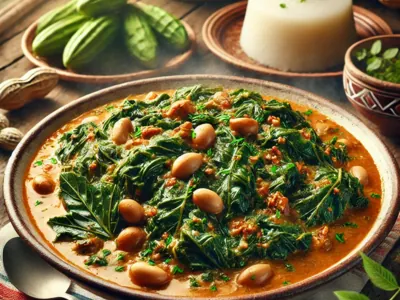
Fumbwa emerges from Congo's forests and gardens, built on wild spinach or foraged greens that grow abundantly during the rainy season when the dish is most popular. The greens carry an earthy, almost mineral taste that distinguishes Fumbwa from other cassava leaf preparations—this is home cooking that follows seasonal rhythms and local abundance. Congolese families combine these greens with peanut paste and smoked fish, creating a dish that tastes of place and time. Fumbwa demonstrates how Congolese cooks extend and enhance humble vegetables through technique and ingredient knowledge passed down through generations.
If using fresh cassava leaves, they should be washed thoroughly and then boiled in water for about 10 minutes to remove bitterness. Drain and finely chop the leaves. If using pre-packaged cassava leaves, follow the package instructions.
Soak the dried fish in warm water to rehydrate, then flake into small pieces.
If using meat, season with salt and pepper.
In a large pot, heat the palm oil or vegetable oil over medium heat.
Add the meat and cook until browned on all sides. Remove the meat and set aside.
In the same pot, add the chopped onion and garlic. Sauté until the onions are soft and translucent.
Add the chopped tomato and cook for a few minutes until it breaks down and becomes saucy.
Return the meat to the pot (if using) and stir to combine with the tomato mixture.
Add the cassava leaves, ground peanuts or peanut butter, and flaked fish.
Pour in the water or chicken broth, and add ground crayfish if using.
Stir well to combine all the ingredients.
Bring the mixture to a boil, then reduce the heat to low.
Cover and simmer for about 45 minutes to 1 hour, stirring occasionally, until the cassava leaves are tender and the flavors are well blended. Adjust seasoning with salt and pepper as needed.
Serve the Fumbwa hot with a side of rice, plantains, or fufu.
Pondu uses cassava leaves as the primary vegetable, while Fumbwa traditionally uses wild spinach or forest greens—a different botanical ingredient entirely. Both are Congolese stews featuring peanuts and aromatics, but Fumbwa's greens have a more delicate, mineral quality that cooks down faster. If you cannot find fumbwa greens, spinach is an acceptable substitute.
Yes. Modern adaptations often use spinach or kale when fumbwa greens are unavailable. The flavor profile shifts slightly—spinach is milder, kale is earthier—but the technique and result remain recognizable as Fumbwa. Use about 1.5 pounds fresh greens or 10 ounces frozen, thawed and squeezed dry.
Boiling removes bitterness and any grit or insects that may cling to foraged greens. The quick 10-minute boil is enough to reduce bitterness without destroying nutrients or making the greens mushy. After draining, they can handle the longer stew cooking without becoming unpleasantly soft.
Smoked fish adds authentic depth and umami that's difficult to replicate. If unavailable, dried shrimp, ground crayfish, or dried anchovies provide similar savory richness. A small amount of fish sauce can work in a pinch, though it changes the flavor subtly. Skip it entirely if you prefer vegetarian versions.
Patience is key. Bring everything to a boil, then simmer very gently for 45 minutes to 1 hour, stirring occasionally. The peanut paste thickens the sauce naturally, and the longer cooking allows flavors to marry completely. Rushing the process results in thin, disconnected flavors.