FoodieAtlas
Recipes around the World
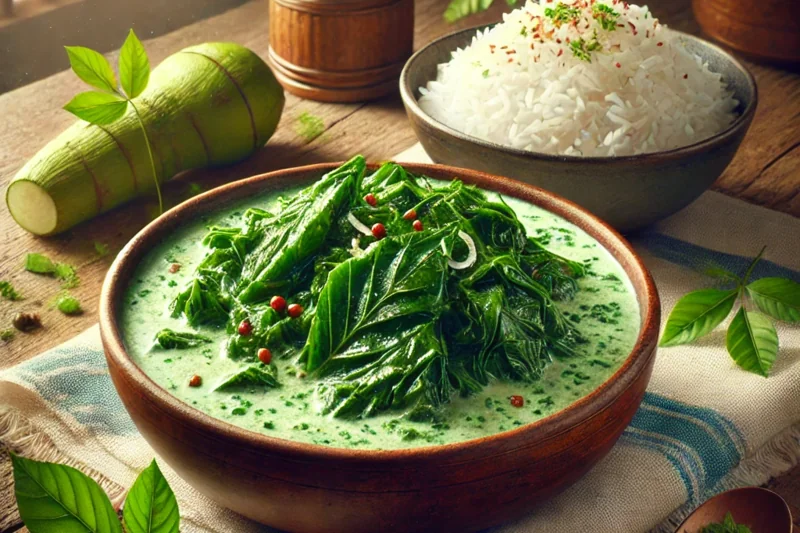
Dark green cassava or taro leaves wilt into a creamy coconut broth, their bitterness tempered by the milk's richness and the warmth of coriander and cumin—mataba appears on Comorian tables as both everyday supper and company food. Mataba represents the practical ingenuity of island cooking: cassava and taro grow abundantly, coconut is ubiquitous, and the combination creates something far more complex than its sparse ingredient list suggests. Unlike mafé (West African peanut stew), mataba uses greens rather than meat as its foundation, making it lighter yet deeply satisfying. The dish likely emerged from Swahili and Arab influences on the islands' cuisine, yet the execution and flavor profile remain distinctly Comorian. A single pot simmering on the stove means family meals, communal eating, and the simple joy of cooking with what the earth provides.
Heat the vegetable oil in a large skillet over medium heat.
Add the chopped onion and garlic, and sauté until the onion is translucent and fragrant.
Add the chopped spinach or cassava leaves and cook until wilted.
Stir in the coconut milk, ground coriander, and ground cumin. Cook for an additional 5 minutes, allowing the mixture to thicken slightly.
Season with salt and black pepper to taste. Remove from heat and let the filling cool.
In a large bowl, combine the flour and salt.
Cut in the chilled butter until the mixture resembles coarse crumbs.
Gradually add the cold water, mixing until a dough forms. Knead lightly until smooth.
Divide the dough into small balls and roll each ball into a thin circle on a floured surface.
Spoon a portion of the cooled filling onto the center of each dough circle.
Fold the dough over the filling to create a half-moon shape, pressing the edges together to seal.
Heat a little oil in a skillet over medium heat.
Cook the mataba on each side for 3-4 minutes, or until golden brown and crispy.
Serve the mataba warm as a savory snack or side dish.
Mataba is a Comorian stew of cassava leaves or taro greens simmered in coconut milk with aromatic spices (coriander, cumin) and deepened with caramelized onion and garlic. The greens release their bitterness into the cooking liquid, balanced by the milk's sweetness and coconut fat.
Mataba is traditionally Comorian, originating from the archipelago's integration of Swahili, Arab, and local cooking traditions. Cassava and taro, which form the base, arrived via East African and Indian Ocean trade routes, yet the Comorian execution—emphasizing coconut and spice balancing—is uniquely theirs.
Fresh cassava leaves (preferred for their slightly bitter flavor) or taro leaves, chopped and cooked until soft. Coconut milk provides richness and sweetness. Ground coriander and cumin add warmth and complexity. Onion and garlic, caramelized slowly, deepen the broth and provide umami.
Wash cassava leaves very thoroughly to remove any residue—they can be slightly toxic raw. Cook the onion and garlic slowly until deeply caramelized; this takes 10-15 minutes and is essential for flavor depth. The coconut milk should simmer gently; boiling aggressively can cause it to separate and turn oily.
Serve mataba hot with rice, cassava porridge, or flatbread to soak up the coconut broth. A squeeze of fresh lime brightens the richness. Some versions include fish or shrimp, though vegetarian mataba is equally traditional.