FoodieAtlas
Recipes around the World
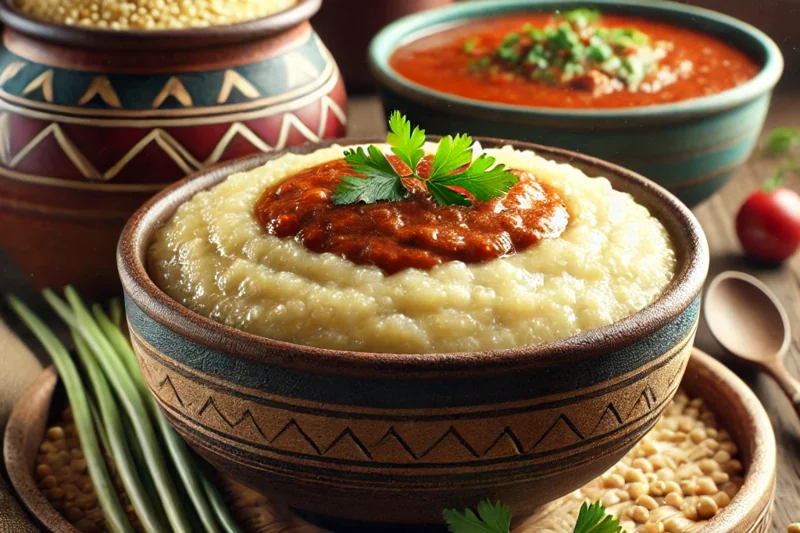
Esh thickens in the pot, transforming from light flour suspended in water into a substantial, slightly gelatinous mass with an ancient, grounding flavor. Millet and sorghum have fed the Sahel for millennia, and esh represents the simplest and most essential way to prepare these grains. The porridge carries subtle nuttiness when made with good grain. Many cooks finish esh with a knob of butter or oil, but its real power emerges when served beneath rich stews—the thick, neutral base catches sauce beautifully while the grain provides sustained, slow energy. Esh is comfort and economy at once, a meal that costs little but nourishes deeply.
In a large pot, bring 4 cups of water to a boil.
Slowly whisk in the millet flour or cornmeal, stirring continuously to prevent lumps from forming.
Add the salt and stir well.
Reduce the heat to low and cover the pot.
Cook for about 15-20 minutes, stirring occasionally to ensure it does not stick to the bottom of the pot.
If desired, stir in vegetable oil or butter for added richness.
You can also add fresh herbs or spices to enhance the flavor, such as coriander or thyme.
Once the Esh has thickened and the grains are fully cooked, remove it from heat.
Esh is a millet or sorghum porridge—nothing more than the grain simmered in water until thick and creamy. It’s neutral in flavor, substantial, and acts as the foundation for Chadian meals. Good esh has a subtle grain sweetness and smooth, almost silken texture when stirred properly.
Esh comes from Chad and throughout the Sahel, where millet and sorghum have been cultivated for thousands of years. The porridge represents one of humanity’s oldest ways of preparing grain—simple, direct, and endlessly nourishing.
Just millet flour or sorghum flour, water, and salt. Oil or butter is sometimes added for richness. Some cooks incorporate optional herbs like coriander or thyme, but esh is intentionally simple—it should taste of grain, not competing flavors.
Whisk the flour constantly as it goes into boiling water to prevent lumps—this is critical. Stir frequently during cooking so it doesn’t stick to the bottom. Use good-quality millet or sorghum flour; the grain flavor matters. Cook until thick but still pourable over stew.
Esh is designed to be the foundation for stews and sauces—serve it beneath jarret de boeuf, daraba, brochettes, or any Chadian stew. The thick porridge catches and holds the sauce while providing grounding, satisfying substance. It’s not a standalone dish but a vehicle for other flavors.