FoodieAtlas
Recipes around the World
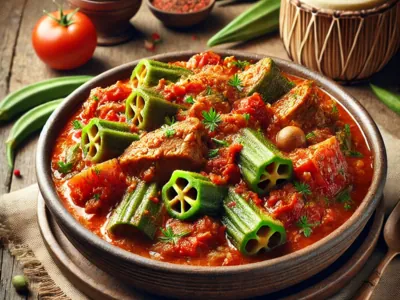
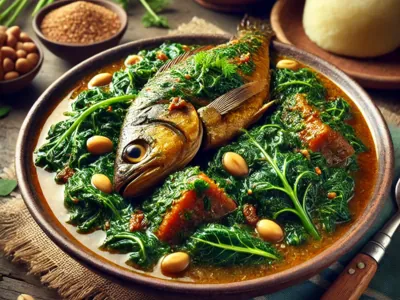
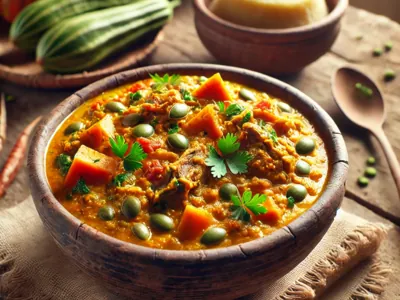
Ngoudja arrives as a creamy, rust-colored stew, its surface glistening with palm oil and studded with tender vegetables in a velvety groundnut sauce. Across the Central African Republic, this dish appears in kitchens from humble homes to market stalls, valued for its satisfying richness and deep, nutty flavor. The combination of roasted groundnut paste with tomatoes and spices creates a complex savory profile unique to Central African cooking. Families often prepare large batches to share, as ngoudja improves when simmered and rested, with flavors melding overnight.
Heat the palm oil in a large pot over medium heat.
Add the finely chopped onion and cook until translucent.
Stir in the minced garlic and chopped hot peppers, and cook for another 2 minutes.
Add the tomato sauce or diced tomatoes to the pot. Cook until the tomatoes break down and form a sauce.
Stir in the groundnut paste or peanut butter. Mix well with the tomato sauce.
Pour in the chicken or vegetable broth and bring to a boil.
Reduce the heat to low and stir in the ground ginger, paprika, and coriander.
Simmer for about 20 minutes, or until the sauce has thickened and the flavors are well combined.
Season with salt and black pepper to taste.
Simmer for an additional 10 minutes to allow the flavors to meld.
Serve the Ngoudja hot, garnished with fresh cilantro or parsley if desired. Enjoy with rice, plantains, or a traditional starch.
Ngoudja is a creamy stew centered on roasted groundnut paste, simmered with tomatoes, palm oil, and warm spices. The groundnut paste creates a velvety base that coats vegetables and whatever protein you choose. It's comfort food with serious depth of flavor.
Ngoudja originates in the Central African Republic, where peanuts and groundnuts are central to regional cooking. The dish showcases how Central African cooks build complex, satisfying meals from essential pantry ingredients.
The foundation is roasted groundnut paste or peanut butter, combined with palm oil, onion, garlic, hot peppers, tomato sauce, and broth. Ginger, paprika, and coriander add warmth and complexity. Together they create a sauce that's nutty, savory, and slightly spiced.
Use roasted groundnut paste if you can find it—regular peanut butter works but lacks the deeper roasted notes. Whisk the paste smoothly into the broth to avoid lumps. Let the stew simmer at least 20 minutes so flavors fully develop. It's even better the next day.
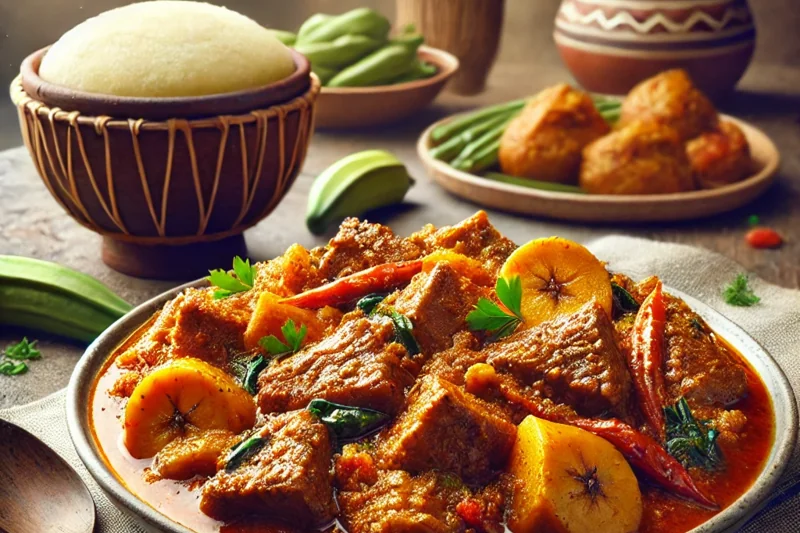
Serve ngoudja over steamed rice, with plantains, or alongside fufu or cassava. Some eat it with crusty bread or flatbread for soaking up the creamy sauce. The starch helps balance the rich, nutty intensity of the groundnut stew.