FoodieAtlas
Recipes around the World
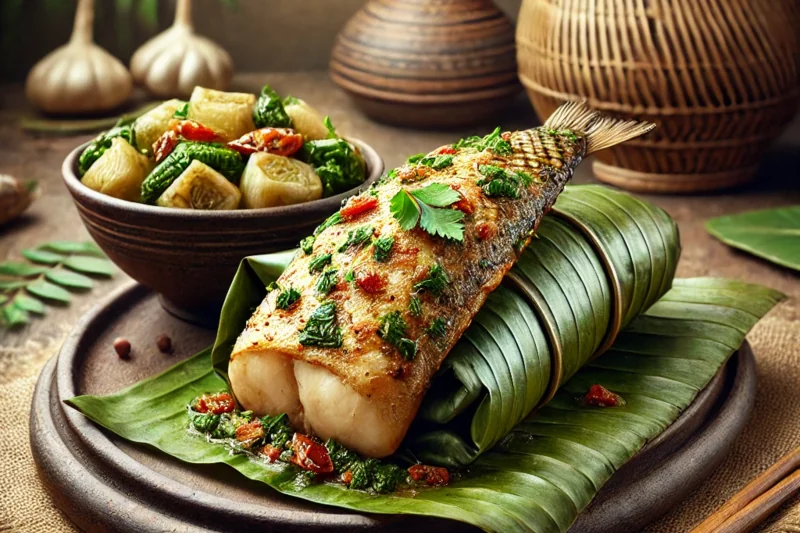
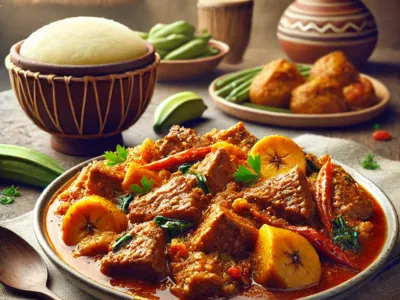
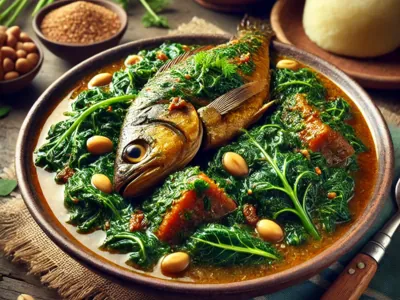
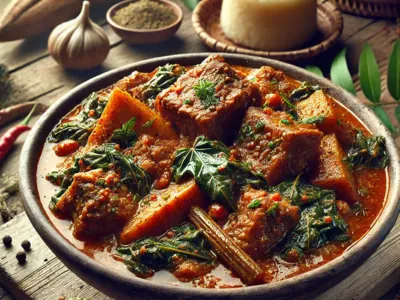
Maboké arrives wrapped in banana leaves, steaming with the fragrance of palm oil, peanuts, and dried fish melded into a thick, creamy cassava paste. Across Central Africa, cooks bundle this mixture and steam it, allowing flavors to meld and the cassava to become silky. The dish reflects centuries of adaptation—using cassava's reliable starch as the base and building complexity with preserved fish and ground peanuts. Maboké represents both resourcefulness and care, transforming humble ingredients into sustenance that carries deep cultural meaning through its flavors and the ritual of its preparation.
Heat the palm oil in a large pot over medium heat.
Add the finely chopped onion and cook until translucent.
Stir in the minced garlic and chopped hot peppers, and cook for another 2 minutes.
Add the shredded dried fish or smoked meat to the pot. Cook for a few minutes to combine with the aromatics.
Stir in the grated cassava and mix well with the other ingredients.
Add the ground peanuts or peanut butter to the pot, stirring well to combine.
Pour in the water or broth, and bring to a boil.
Reduce the heat to low and simmer for about 30-45 minutes, or until the cassava is cooked and the mixture has thickened.
Season with salt and black pepper to taste.
Simmer for an additional 10 minutes to allow the flavors to meld.
Serve the Maboké hot, garnished with fresh herbs if desired, and enjoy with a side of rice or plantains.
Maboké is a steamed cassava stew enriched with dried fish, peanuts, and palm oil. The grated cassava thickens as it simmers, becoming silky and absorbing flavors from the fish and peanuts. It's cooked until creamy, then often wrapped and steamed further in banana leaves for added depth.
Maboké comes from the Central African Republic, where cassava is a dietary foundation and dried fish provides critical protein and flavor. The dish showcases how Central Africans turn preserved ingredients into sophisticated, layered meals.
The core is grated cassava, which thickens and becomes the dish's body. Dried fish or smoked meat adds salty umami. Ground peanuts create creaminess while palm oil provides richness. Onion, garlic, and hot peppers form the fragrant base that seasons everything.
Prepare cassava well—it should be finely grated and drained to avoid excess moisture. Use dried fish with true smoke flavor. Stir frequently as it simmers to prevent sticking and ensure even cooking. The cassava should become silky, not grainy or lumpy.
Serve maboké hot with rice, plantains, or cassava dishes as a complete meal. It's substantial enough to stand alone but pairs beautifully with simple greens, roasted vegetables, or grilled fish. The starch elements balance the rich, savory intensity of the dish.