FoodieAtlas
Recipes around the World
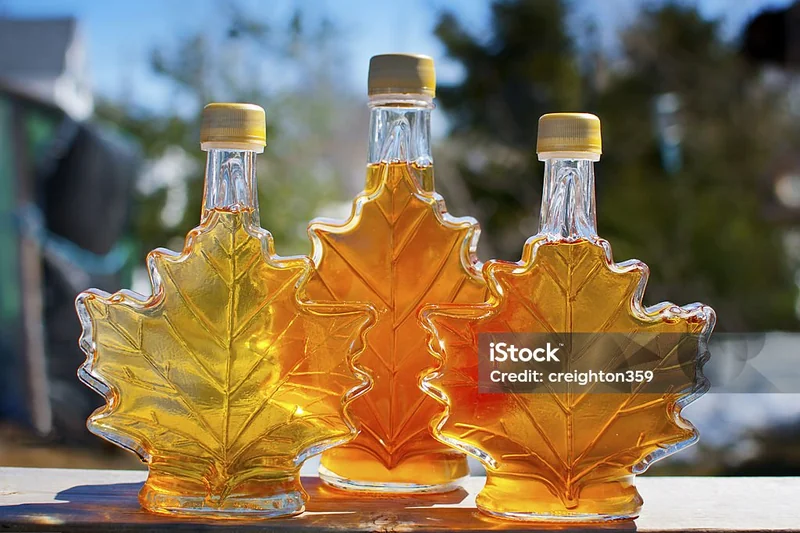
Maple syrup pours from the bottle in a glossy ribbon, its amber to dark brown color shifting with light, its aroma both buttery and forest-like at once. This syrup begins as sap collected in early spring directly from sugar maple trees, clear and watery and barely sweet on its own. Over many hours of boiling, the sap concentrates and transforms, its flavor deepening through a chemical process similar to caramelization. Quebec produces more than 70 percent of the world's maple syrup, and the tradition of tapping maple trees connects to both Indigenous knowledge and French settler traditions spanning centuries.
Collect maple sap from sugar maple trees during the sugaring season, which typically occurs in early spring.
Filter the sap through cheesecloth to remove any impurities and debris.
Pour the filtered sap into a large pot and bring it to a boil over medium heat.
Continue to boil, stirring occasionally, until the sap reduces significantly. This process can take several hours, so it's essential to keep an eye on it to prevent it from boiling over or burning.
Use a candy thermometer to monitor the temperature of the boiling sap. The syrup is ready when it reaches 219째F (104째C) or about 7째F (4째C) above the boiling point of water.
As the sap gets closer to this temperature, the color will darken, and the syrup will thicken.
Once the syrup reaches the desired temperature, remove it from the heat and let it cool slightly.
Filter the syrup through cheesecloth or a syrup filter to remove any remaining impurities.
Pour the filtered syrup into clean, sterilized containers while it's still warm. Seal the containers tightly.
Store the maple syrup in a cool, dark place. For long-term storage, you can refrigerate or freeze the syrup.
Enjoy maple syrup on pancakes, waffles, French toast, or as a sweetener for various recipes.
Sap is collected during early spring (February-March in Quebec) when days warm above freezing but nights remain cold. Taps are inserted into the tree, and gravity causes sap to flow out through tubing to collection tanks. Modern operations use continuous tubing systems.
Quebec's climate and dense forests of sugar maples make it ideal for maple syrup production. The province has established regulations and traditions that have made it the world's largest producer for over a century.
Syrup is graded by color: Golden (light, delicate), Amber (rich), Dark (robust), and Very Dark (strong). The color develops based on cooking time and sap quality. Darker syrups are often used in cooking while lighter ones are preferred for pancakes.
Syrup reaches its proper consistency at 219-220°F (104-105°C), about 7°F above water's boiling point. If heated less, it will be too thin; if heated more, it will crystallize as it cools.
While maple syrup on pancakes and waffles is iconic, Québécois also pour it over snow to make taffy, use it in cooking and baking, and enjoy it as a condiment with roasted meats and vegetables.