FoodieAtlas
Recipes around the World
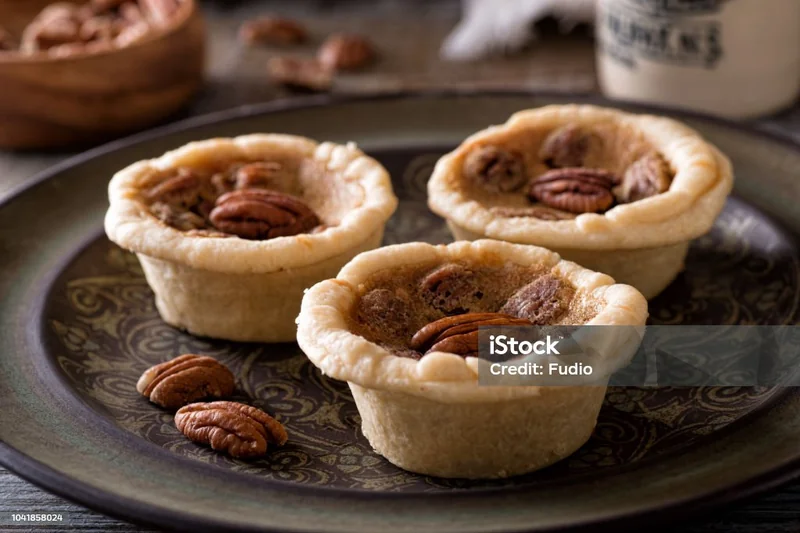
Butter tarts emerge from the oven with pastry edges just beginning to brown, their centers still slightly molten and glossy, filling often threatening to spill over the rim. These small tarts originated in Ontario during the early 20th century, a simple dessert that became iconic across Canada. The filling—a combination of brown sugar, butter, eggs, and often raisins or nuts—creates a texture somewhere between a tart and a candy when baked, caramelizing at the edges while remaining gooey in the center. The debate over whether a butter tart should be crispy or custardy has become a passionate part of Canadian food culture, with different families defending their preferred texture fiercely.
In a medium bowl, whisk together the flour and salt.
Cut in the cold, cubed butter using a pastry cutter or your fingers until the mixture resembles coarse crumbs.
Stir in the granulated sugar.
Add the egg yolk and ice water, one tablespoon at a time, until the dough comes together.
Form the dough into a disc, wrap it in plastic wrap, and refrigerate for at least 30 minutes.
Preheat your oven to 375°F (190°C).
On a lightly floured surface, roll out the chilled dough to about 1/8 inch thick.
Cut out circles of dough to fit into a muffin tin, about 3 inches in diameter.
Gently press the dough circles into the muffin tin cups, forming a small tart shell.
In a large bowl, combine the brown sugar, melted butter, eggs, flour, vanilla extract, and corn syrup or maple syrup. Mix until smooth.
If using, fold in the raisins or chopped pecans.
Spoon the filling into the prepared tart shells, filling each about 3/4 full.
Bake in the preheated oven for 20-25 minutes, or until the filling is set and the pastry is golden brown.
Allow the butter tarts to cool completely in the tin before removing.
Serve the butter tarts at room temperature or slightly warm.
This is a passionate debate in Canada. A properly baked butter tart should have slightly crispy edges with a just-set center that's slightly creamy. Some prefer them fully set and firm, others like them almost liquid in the middle. There's no single correct answer—it's regional and personal.
Butter tarts emerged in Ontario in the early 1900s, though some food historians trace them to earlier British tart traditions. They became so popular across Canada that many regions now claim ownership of the recipe.
Historically, yes—many classic recipes include raisins or sometimes pecans. However, modern variations are common, with some people omitting them, adding different nuts, or incorporating maple syrup instead of corn syrup.
The filling expands significantly during baking as the mixture heats and rises. To prevent overflow, fill the tart shells only about three-quarters full. If overflow occurs, it creates a crispy, caramelized edge that many consider desirable.
Butter tarts are best eaten within a day of baking when the pastry is still fresh and crispy. They can be stored in an airtight container at room temperature for 2-3 days or refrigerated for up to a week.