FoodieAtlas
Recipes around the World
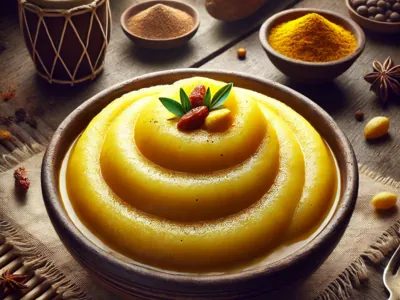
The creamy mash is studded with flakes of smoked fish, its subtle sweetness complemented by the umami of crayfish and the earthiness of palm oil. Kondre originates with the Bamileke people of Cameroon's western highlands, where cocoyam thrives in the volcanic soils and smoked fish represents trade connections to coastal regions. The dish walks a careful line between stew and pudding, thick enough to hold a spoon yet creamy enough to flow on the plate. Traditionalists serve kondre piping hot with extra palm oil drizzled over the top, its luxury reserved for special celebrations where large families gather.
In a large pot, add the cubed cocoyam and enough water to cover. Bring to a boil and cook until tender, about 15-20 minutes.
Drain the cocoyam and mash it until smooth. Set aside.
In a separate pot, heat the palm oil over medium heat.
Add the chopped onion and minced garlic. Sauté until the onions are translucent.
Stir in the ground crayfish, ground pepper, and seasoning cubes (if using). Cook for a few more minutes to blend the flavors.
Add the mashed cocoyam to the pot with the condiments. Mix well.
Gradually add beef or chicken broth (or water), stirring to achieve a smooth and thick consistency.
Stir in the smoked fish and cook for an additional 5-10 minutes, allowing the flavors to meld.
If using, add the chopped spinach or bitter leaf and mix well.
Serve the Kondre hot as a main dish or side. It pairs well with additional palm oil or a side of steamed vegetables.
Kondre should be creamy yet thick enough to hold shape—somewhere between mashed potatoes and porridge. The consistency comes from pounding boiled cocoyam until smooth, then mixing with broth until the right body develops. Adding too much liquid creates soup rather than stew.
Smoked fish adds depth and a distinctive taste that plain crayfish alone cannot provide. The smoke infuses the mash with a subtle cooking method flavor that defines kondre's identity. Fresh fish would not work—the smoking is essential to the traditional taste.
Kondre comes from the Bamileke people of Cameroon's western highlands, in regions like Bafut and Bamunlike. The dish reflects local availability of cocoyam and fishing traditions that allowed preservation of fish through smoking.
Yam or plantain work as substitutes, though they create different textures and flavors. Cocoyam gives a starchy, slightly nutty base that's traditional. Spinach or bitter leaf can be stirred in near the end for additional flavors and nutrition.
Kondre is always served hot, ideally fresh from the pot. Sometimes extra palm oil is drizzled over the top before serving, adding richness and traditional luxury. It's eaten as a main dish rather than a side, though it pairs well with rice or cassava.