FoodieAtlas
Recipes around the World
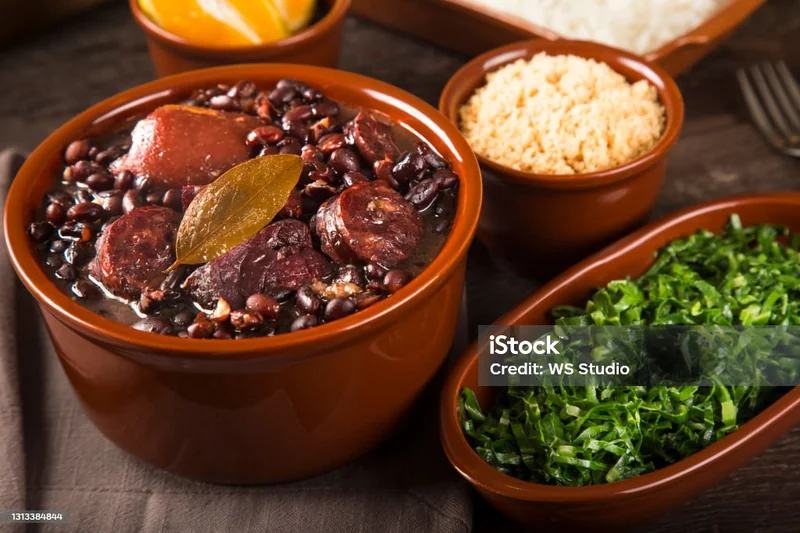
The smell of feijoada in Brazil signals something: today is a special occasion. This slow-cooked stew of black beans and smoked meats traces its roots to 19th-century sugar cane plantations, where enslaved workers combined discarded cuts of pork with beans and created something extraordinary out of scarcity. Traditionally a Saturday afternoon meal, feijoada arrives fully attended at the table: white rice, garlicky collard greens (couve), toasted cassava flour (farofa), and orange slices — the citrus is not decoration, its acidity cuts through the richness and completes the plate.
In a large pot or Dutch oven, add the soaked black beans and cover with water.
Bring to a boil, then reduce heat and simmer for about 1 hour, or until the beans are tender. Drain and set aside.
In the same pot, heat the vegetable oil over medium heat.
Add the chopped bacon and cook until crispy. Remove and set aside, leaving the fat in the pot.
Add the pork shoulder chunks and cook until browned on all sides.
Stir in the chorizo, smoked sausage, onion, and garlic. Cook until the onion is translucent and the sausages are lightly browned.
Stir in the chopped carrots, red bell pepper, and chopped tomatoes.
Add the bay leaves, paprika, ground cumin, black pepper, and salt.
Return the drained black beans and crispy bacon to the pot.
Pour in the chicken broth or water, and stir to combine.
Bring to a boil, then reduce heat and simmer for 1-2 hours, or until the meat is tender and the flavors have melded together.
Remove the bay leaves before serving.
Feijoada is a slow-cooked black bean stew layered with smoked meats — pork ribs, chouriço, carne seca, and bacon — that has been Brazil's national dish for centuries. Its roots trace back to the 19th century, when enslaved workers on sugar plantations combined discarded cuts of pork with beans, turning scarcity into something extraordinary.
Feijoada is closely tied to Afro-Brazilian culinary heritage. While some historians point to Portuguese bean stew traditions as a distant influence, the Brazilian feijoada — black beans, smoked meats, and the full completa service — is distinctly its own. Rio de Janeiro and São Paulo each claim a slightly different version, with São Paulo's tending to be thicker.
The core is black beans soaked overnight, cooked with smoked sausage (linguiça), pork shoulder, bacon, and carne seca. The full feijoada completa is served with white rice, farofa (toasted cassava flour), couve (garlicky collard greens), and orange slices — the citrus is not decorative; it cuts the fat.
Soak the beans overnight and, if using carne seca, soak it separately in cold water for a few hours to reduce the salt. Low and slow is the rule — rushing a feijoada produces tough meat and underdeveloped flavor. The stew is often better the next day, after the flavors have fully merged overnight.
A traditional feijoada completa includes white rice, farofa, sautéed collard greens, and orange slices. A small caipirinha is the customary drink. The orange slices are not optional — their acidity genuinely balances the richness of the stew.