FoodieAtlas
Recipes around the World
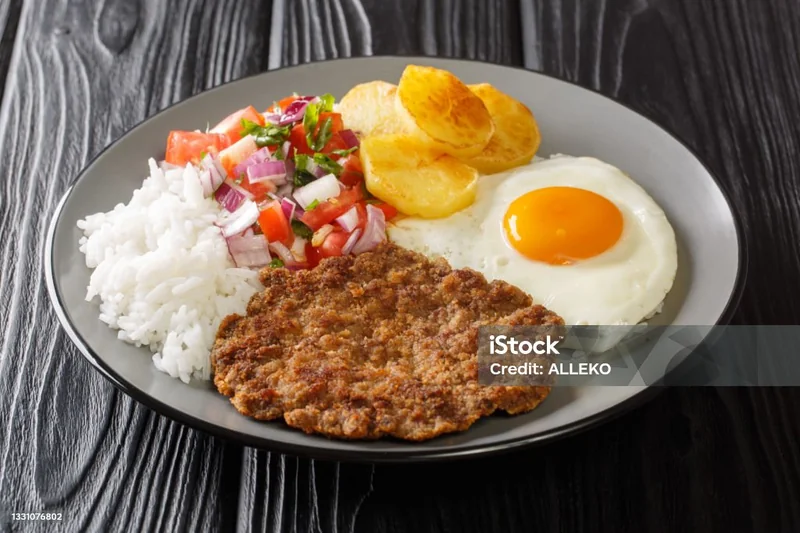
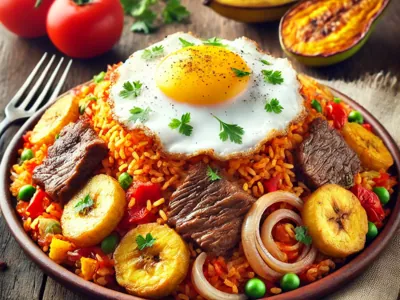
The beef cutlet shatters when you cut it, revealing a crispy golden crust that contrasts with tender meat underneath. This Cochabamba specialty reflects Bolivia's urban food culture, where vendors serve silpancho at lunch stalls and casual restaurants across the city. The combination of protein-rich beef with carbohydrates from rice and potatoes provides sustenance for manual laborers and office workers alike. A sunny-side egg perched on top adds richness, while fresh salsa cuts through the richness with brightness and acid.
In a large pot, bring 4 cups of water to a boil.
Add the vegetable oil and salt.
Stir in the rice, reduce the heat to low, cover, and simmer for about 18-20 minutes, or until the rice is cooked and the water is absorbed. Fluff with a fork and set aside.
In a large skillet, heat vegetable oil over medium-high heat.
Fry the potato slices until golden brown and crispy. Remove and drain on paper towels. Season with salt to taste.
Season the pounded beef with salt and pepper.
Dredge each piece of beef in flour, then dip in beaten eggs, and coat with bread crumbs.
In a large skillet, heat vegetable oil over medium-high heat.
Fry the breaded beef until golden brown and crispy on both sides. Remove and drain on paper towels.
In a bowl, combine the diced tomatoes, finely chopped onion, green bell pepper, chopped cilantro, lime juice, salt, and pepper. Mix well and set aside.
In a small skillet, fry the eggs sunny-side up.
On a large plate, place a mound of rice.
Top the rice with a layer of fried potatoes.
Place a piece of breaded beef on top of the potatoes.
Add a generous spoonful of salsa on top of the beef.
Place a fried egg on top of the salsa.
Garnish with freshly chopped parsley.
Silpancho is a complete plate featuring a paper-thin beef cutlet that has been breaded and fried until golden and crispy. It comes topped with a fried egg and served on a bed of white rice and crispy fried potatoes, finished with fresh tomato salsa.
While silpancho appears throughout Bolivia, it is especially iconic in Cochabamba, where lunch vendors serve it as a midday staple. The dish has roots in Bolivian urban food culture and reflects the practical, filling meals favored by working-class communities.
The technique of pounding beef extremely thin before breading and frying creates a cutlet with maximum surface area for crisping. The thin meat cooks quickly, staying tender inside while the bread crumb coating turns golden brown and crunchy.
The runny yolk adds richness and helps bind the components of the plate together when broken. Some versions skip the egg, but most traditional servings include it as a crucial component that completes the protein-carbohydrate balance.
Fresh tomato-onion salsa with lime juice and cilantro is standard, providing acid and brightness. Lime wedges, extra white rice, and occasionally a simple green salad appear as common accompaniments, though the core dish stands complete on its own.