FoodieAtlas
Recipes around the World
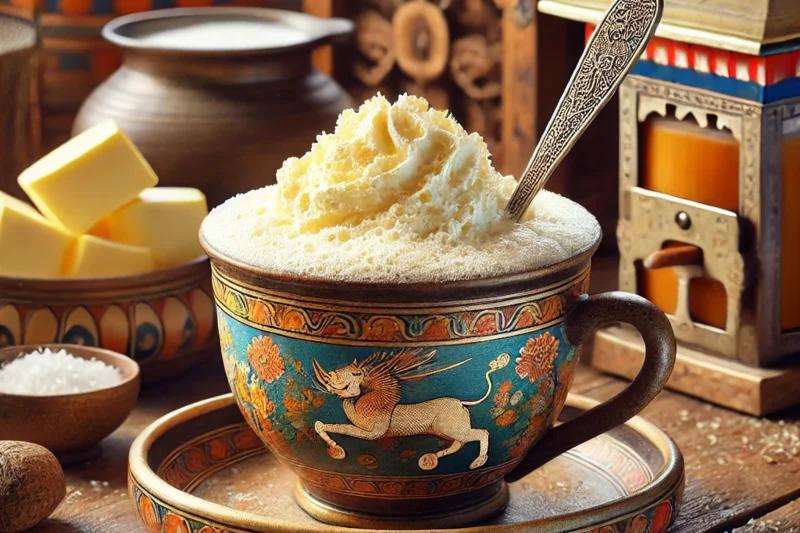
Suja is a distinctive creamy drink that arrives in a wide bowl, its pale tan surface swirled with butter and topped with a generous layer of foam. Made from black tea churned with salt and yak butter (or regular butter), it's savory, luxurious, and nothing like the sweet milky tea many Westerners expect. The first sip surprises—the salt and fat create something almost brothy, rich without being heavy, warming without being hot enough to burn. In Bhutan's high-altitude mountain villages, suja is consumed in copious quantities throughout the day, prized for its ability to warm from within and provide sustained energy in a harsh climate. To Bhutanese people, suja represents hospitality itself—an invitation to sit, rest, and be nourished.
In a large pot, bring 4 cups of water to a boil.
Add the loose black tea leaves or tea bags to the boiling water.
Reduce the heat and let the tea simmer for about 5 minutes.
If using tea bags, remove them after 5 minutes.
Strain the tea to remove the loose leaves, pouring the tea back into the pot.
Add the salt to the tea and stir well to dissolve.
Add the unsalted butter to the pot.
Using a churner or an immersion blender, blend the tea and butter mixture until it is frothy and the butter is fully incorporated.
If you prefer a creamier texture, add the milk to the pot and heat gently, stirring to combine.
Pour the Suja into cups or bowls.
Suja is a salted butter tea—black tea is brewed, then churned or blended with salt and yak butter (or regular butter) until creamy and frothy. It's savory, rich, and served hot in wide bowls.
Suja is quintessentially Bhutanese, essential to daily life at high altitude where its warmth and richness are deeply practical. It's served constantly throughout the day in homes and monasteries.
Black tea is the base; butter (ideally yak butter, but any unsalted butter works) and salt are essential. Some versions include milk for additional creaminess, but the classic form is tea, butter, and salt only.
Churning or blending incorporates the butter fully and creates that characteristic foam. Without this step, the butter will separate and the tea won't have the right texture. A traditional wooden churner or even an immersion blender works.
Suja is served with nearly everything in Bhutan—alongside momos, rice, dried cheese, and snacks. It's consumed throughout the day and offered to guests as a gesture of welcome and hospitality.