FoodieAtlas
Recipes around the World
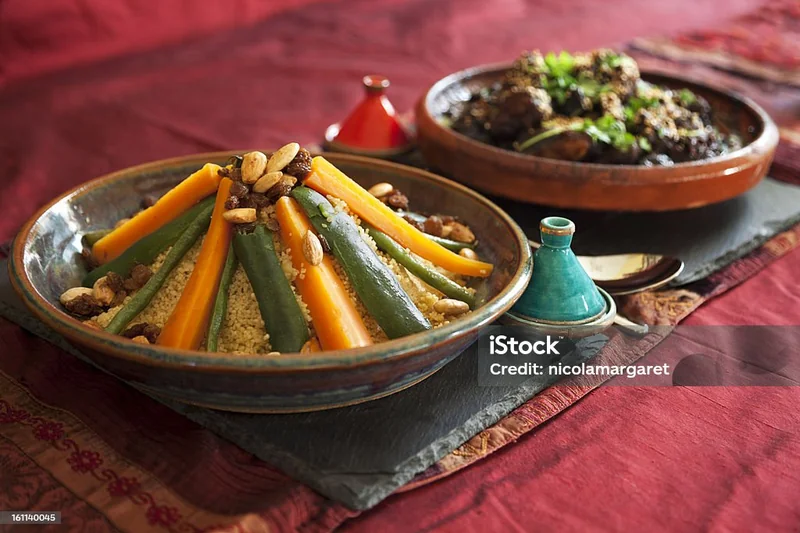
Couscous arrives as a mound of fluffy, separate grains piled high on a platter, surrounded by a fragrant stew of vegetables and sometimes meat, the aroma of cumin and turmeric rising from the bowl. This is North Africa's most iconic dish, made from semolina wheat hand-rolled into tiny pellets, then steamed until light and airy, a technique perfected over centuries in Algeria, Morocco, and Tunisia. The grain itself is neutral, allowing the vegetables and spices—carrots, zucchini, chickpeas, sweet squash, all in a sauce scented with cinnamon and coriander—to shine. Couscous is traditionally eaten communally from a large platter, with diners pinching the grains together and using a piece of vegetable to carry them to their mouth.
In a large pot, heat the olive oil over medium heat. Add the finely chopped onion and sauté until soft and translucent. Add the minced garlic and cook for another minute.
Add the chopped carrots, zucchinis, red bell pepper, and butternut squash to the pot. Cook for about 5-7 minutes, stirring occasionally.
Stir in the ground cumin, ground coriander, ground paprika, ground turmeric, ground cinnamon, salt, and pepper. Cook for another 2-3 minutes until the spices are fragrant.
Pour in the vegetable or chicken broth and add the chopped tomato. Bring to a boil, then reduce the heat and let it simmer for about 20-25 minutes, or until the vegetables are tender.
While the vegetables are cooking, prepare the couscous according to the package instructions. Typically, you would bring 2 cups of water to a boil in a separate pot. Remove from heat, stir in the couscous, cover, and let it sit for about 5 minutes. Fluff with a fork before serving.
Stir the cooked chickpeas into the vegetable mixture and let it simmer for another 5 minutes to heat through.
Couscous is made from semolina wheat that has been hand-rolled into tiny pellets and dried, then steamed to fluffy grains. In Algeria, it is traditionally topped with a vegetable and meat stew (called a tagine), creating a complete meal. The grain itself is light and delicate, designed to absorb the flavors of the stew.
Couscous originated in North Africa around the 13th century and remains central to Algerian, Moroccan, and Tunisian cuisine. The dish is so tied to Algeria that Algerian couscous is considered by many to be the gold standard. In Algeria, couscous is eaten for Friday lunch, holidays, and celebrations, and represents communal dining and hospitality.
The couscous grains are semolina wheat, steamed until fluffy. The accompanying stew contains olive oil, onions, garlic, and vegetables such as carrots, zucchini, butternut squash, and bell peppers, along with chickpeas. The stew is flavored with cumin, coriander, paprika, turmeric, and cinnamon, creating a warm, aromatic sauce.
Do not stir the couscous excessively while it hydrates; stir it once when you add the grains to hot broth, cover it, and let it sit undisturbed for 5 minutes. After it rests, fluff it gently with a fork to separate the grains. For the stew, let the vegetables cook slowly so they become tender and the flavors meld; rushing the cooking creates watery, undercooked vegetables.
Couscous is typically served with its vegetable stew spooned over the grain mound. Grilled or braised lamb, chicken, or merguez sausage are common protein additions. Harissa or another spiced condiment is often passed at the table, and crusty bread helps soak up the sauce.